 Cagliari Boat Tours
What to Bring on a Cagliari Boat Tour: The Honest Day Bag
Cagliari's boat days are short, sunny and forgiving - which is exactly why the packing advice floating around forums overshoots. This what to bring Cagliari boat tour list is built against what the listings in the Cagliari gulf boat price comparison actually provide and never provide, with the side-by-side Cagliari boat tours table open for the inclusions column.
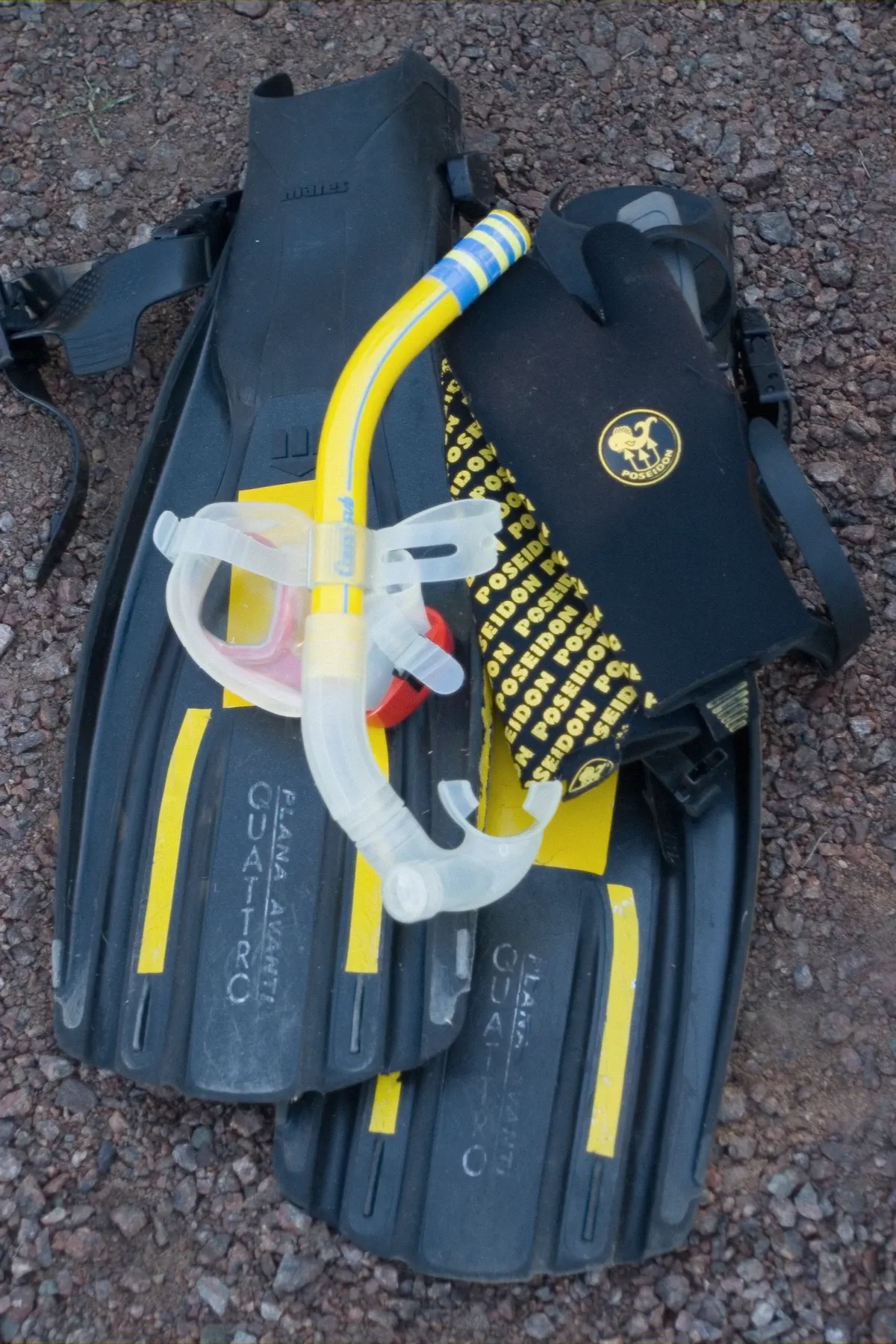
The one kit you can leave home: every swimming boat in the catalog carries snorkel gear. Photo: Tomas Hellberg from Linköping, Sweden, CC BY 2.0, via Wikimedia Commons.0, via Wikimedia Commons.
Quick answer The five items that earn their space, the towel rule (bring one), and the ID line that catches out RIB travellers
The Cagliari day bag is small: swimwear worn under clothes, a towel (the one item no listing in the comparison provides), reef-safe sunscreen already applied, a dry layer for the ride home, and cash for the quayside bars at Marina Piccola and Cala Fighera. Snorkel gear is on every swimming boat's crate; water goes around on most decks; IDs are the sleeper item - the RIB and yacht check-ins write them into the boat contracts, twenty minutes before departure. What stays ashore: glass bottles, fins you have not used in years, and anything you would grieve overboard. The full logic below, deck by deck.
Key takeaways
- The two-hour formats give no food - eat before boarding; the caves boat is the exception with its aperitivo.
- Fitted your own mask? Bring it - boat crates carry adult sizes, and a leaking mask is how children decide they hate snorkelling; the family guide has the kid version of this list.
- The comparison table's inclusions column settles any 'do they provide X' question per boat.
- The comparison table's inclusions column settles any 'do they provide X' question per boat.
On the Body: Swimwear, Sun, Layers
Wear the swimwear aboard. Changing rooms are a quay feature at best, and every format here swims within the first hour - arriving swim-ready starts the day thirty minutes ahead. Over it: light clothing you can move in, because RIB decks and zodiac tubes reward bendable passengers.
Sun logic on the water is different from beach logic: the gulf's glare arrives from above and from below, and the breeze deletes the warning signs of burning. Apply reef-safe sunscreen before leaving the hotel - spray-on applications wind-lose half their payload - and carry the stick for noses, ears and the shoulders the lifejacket opens on. A strapped hat earns its keep on every deck; sunglasses with a cord on the fast hulls.
The dry layer is the item experienced passengers carry and first-timers mock until the return leg: twenty minutes of wind over wet swimwear after a swim stop is the coldest moment of a Sardinian morning, and a light windbreaker converts it back into a holiday. In the shoulder months the layer goes on at departure, not on the way home.

What the day bag is for: landing with the afternoon intact - the Bastione terrace above the harbour. Photo: Laurettapossamai, CC BY-SA 4.0, via Wikimedia Commons.
In the Bag: The Items That Earn Their Space
The towel. Say it again: no boat in the comparison provides towels - not the flagship, not the yacht, not the private gozzo. A compact travel towel weighs nothing and decides whether the ride home is pleasant.
Cash. The quayside economy is small and cash-friendly in season: the bar at Marina Piccola where the caves boat lands, the seasonal kiosk at Cala Fighera, the coffee the morning quay runs on, and the tip the day earned. Cards work at the lidos; the quay is its own economy.
The phone in a sealed pouch or a zip pocket. Zodiacs and RIBs spray in the afternoon breeze, and the gulf's photos are taken wet-side up. A cheap lanyard pouch outperforms every pocket on a tube deck.
Seasickness tablets, taken before boarding if the stomach votes that way - after boarding is too late on a two-hour format. Aft seats, horizon, crackers: the non-pharmacological stack, per the family guide.
Water bottle. The drink services run wine, prosecco and aperitivo - glorious, none of it hydration. Most crews top up bottles on request; carry one that closes.
What the Boats Provide - and Never Do
Provided, on every swimming boat in the catalog: snorkel gear (masks, usually fins) from the boat's own crate, safety kit including lifejackets, and the skipper's local knowledge - the item you cannot pack. The drink layer varies: prosecco or spritz on the RIBs and catamarans, local wine on the zodiac, the full Sardinian aperitivo on the caves boat, the platter on the private gozzo, and a real cooked lunch only on the full-day yacht.
Never provided, on any listing: towels, food on the two-hour formats, hotel pickups (every boat leaves from a fixed quay - the quay table in the main guide maps the walks), child-sized masks beyond luck, and waterproof phone cases. Build the bag around that list and it will fit in a tote: towel, cash, sun kit, dry layer, water, pouch, tablets-if-needed, ID for the contract boats. Anything more is luggage, and luggage is the enemy of a tube deck.
After the Boat: The Landing Plan
The day bag has one more act. A morning boat lands you at noon with dry swimwear, a fed crew (if you booked the right boat) and a free afternoon - the landing plan is part of the packing. The towel goes back for a Poetto swim if the boat moored at the Lungomare pontoon; the dry layer comes off for the Bastione terrace if you landed at the inner harbour; the cash survives for gelato in whatever quarter the quay points at.
And the boots-level rule that closes the loop: leave the third outfit, the drone, the speaker and the glass bottles ashore. Everything you bring is everything you carry, guard, dry and mourn - and the gulf asks for so little of it. Pack small, swim long, land light.
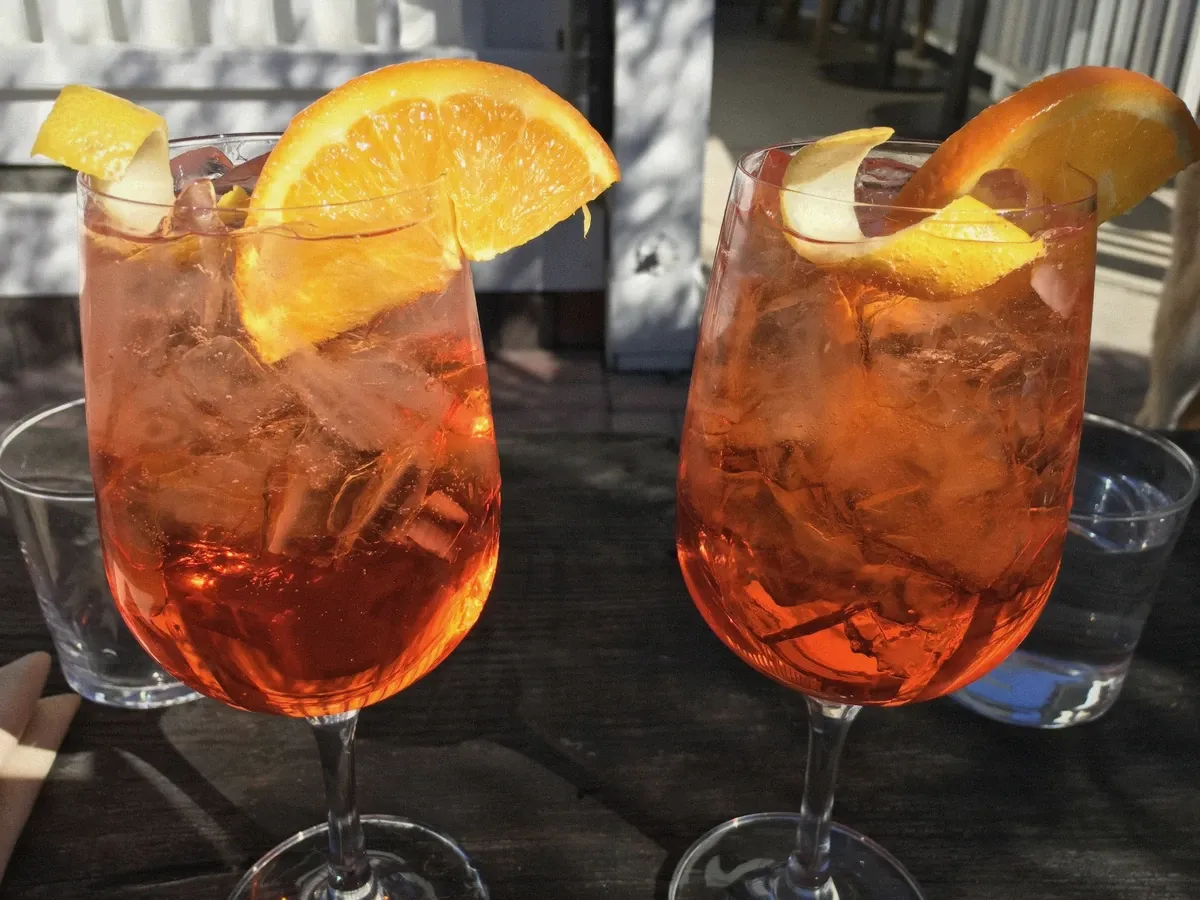
The landing ritual, provided by the city: the spritz the boats taught you to order. Photo: Missvain, CC BY 4.0, via Wikimedia Commons.0, via Wikimedia Commons.
Packing by Season
The day bag barely changes across the season; one layer of it does. The table reads the deltas against the core list (swimwear, towel, sun kit, dry layer, water, cash):
| Window | Add | Why |
|---|---|---|
| May and October | A real windbreaker and a beanie you don't mind photographing | The ride home is the coldest hour of these months; the wind, not the water, takes the heat |
| June and September | The standard bag plus an extra water bottle | Warm enough to swim long; the sun does the work two hours in |
| July and August | Twice the sunscreen, a UV shirt for kids, and the morning slot | The glare doubles off a flat sea; afternoons belong to the breeze |
| Shoulder weeks (April, November) | The full wind layer, seasickness kit, and a spare slot booked | Weather-window sailing: the bag and the plan both hedge |
The Camera and Phone Strategy
The gulf is one of the Mediterranean's easier photo calls - bright water, close cliffs, boats that stop long enough to shoot - and the strategy is mostly about water management. The phone rides in a sealed pouch on a lanyard on every moving leg (zodiac and RIB decks spray from about ten knots of breeze upward) and lives in your hand at the stops: the cave mouths, the saddle silhouette and the water clarity are all phone-lens material in this gulf, no zoom required.
Cameras earn their carry on three subjects: the cliff-line compression shots (a 35-50mm equivalent reads the strata best), underwater at Cala Mosca's shelves where a cheap housing beats every phone, and the dusk run's silhouette hour, where shooting into the light wants a real sensor and a steady rail. The crews are photographed as much as the coast - ask before pointing at faces, and the skippers who narrate will happily pose with the rope coil they gesture with.
And the discipline that separates a good boat-photography day from a broken phone: nothing leaves the pouch while the boat is moving, no matter what the light is doing. The gulf repeats its views at every stop; the floors of RIB decks are unforgiving. Shoot the stops, stow for the runs, and the season and slot guide that got you the calm morning gets you the glass that makes the photos.
The Kid Bag: A Sub-inventory
Children double the day bag's importance without doubling its size - the additions are specific, not numerous. A fitted child's mask tops the list: boat crates stock adult faces, and the seal decides whether a six-year-old finishes the day a snorkeller. The rash vest comes second - it is the sunscreen that cannot sweat off, and on the RIB and zodiac decks it doubles as the spray layer. The strapped hat third; the strap is the item, not the hat.
Then the quiet kit: one snack per child per hour (the swim-time metabolism is real), a dry top for the ride home, armbands if the crew is at the confidence stage, and a small reward held in reserve for the last stop - the negotiation device every parent eventually invents. Motion-sickness crackers ride in a pocket, not the bag, because the moment they are needed is a moving-deck moment.
What the boats supply for children: standard safety kit and patience. What they never supply: child-sized masks, towels, or snacks beyond the caves boat's aperitivo. Pack accordingly and the deck takes care of itself; the family guide carries the deck-choice logic behind the list.
What Gets Left on Boats: A Cautionary Ledger
Every season the gulf's decks collect the same casualties, and the pattern is instructive. Phones lead the ledger - pocketed loose on a tube deck, they slide at the first spray; the pouch-and-lanyard habit prevents the entire category. Sunglasses run second, lost in the mount-and-dismount at the swim stops: strapped frames or a pocket with a zip, never a shirt collar. Hats third - the wind's toll, paid almost entirely by the strapless. Flip-flops and the unstrapped sandal follow their owners into the lost-property bins at a rate the quay bars could chart.
The sadder categories are avoidable in different ways: keys at the bottom of an unzipped bag (a floating pouch answers it), wallets carried ashore onto wet decks for no reason (the quays take cards; leave the leather aboard with your companion), and the towels of the towels-forgot tragedy, which the day bag's first rule exists to prevent.
The ledger's moral is the packing philosophy in reverse: everything you bring should be either attached, zipped, or disposable. Boats are wet, moving, crowded places where pockets face the sea - pack as if the deck were a tide, and the lost-property bin stays a thing you hear about.
The Departure-Quay Economy: What Cash Actually Buys
Each quay runs a small economy around its boats, and knowing it turns the cash line in the day bag from vague advice into a plan. Molo Dogana's quay bar pours the morning's coffee and holds tables for the contract-signing queue; Su Siccu's marina gate bar opens with the fishermen and sells the coldest water on the coast; Marina Piccola's beach-road bars graduate from espresso to aperitivo across the day; and the Lungomare pontoon feeds off Poetto's lido strip, where cards work but the queue argues for notes.
On the water the economy moves aboard: the RIBs' extra rounds, the catamarans' bars, the zodiac's wine refills - all deck-priced, all cash-friendlier. And the tips, the item every traveller asks about: the gulf's crews earn them the old way, and ten percent or a folded note at the gangway says what the reviews say publicly.
What cash never buys on these quays: tickets - every fare in the comparison settles online at booking, and the quay's role is coffee, contracts and the crew's handshake. The card stays for the lidos; the notes ride for everything smaller. That division, packed before departure, is the last item the day bag needs.
The Sunset Run's Bag: One Variant
The evening formats reshuffle the day bag's priorities, and the sunset run is the variant worth packing for separately. The swimwear still goes on under clothes - the dusk swim stop is real - but the sun kit downgrades (the light is kind by definition) and the layers upgrade: the ride home after dusk runs ten degrees cooler than the ride out, and the dry layer that was optional at nine in the morning is the difference between memorable and miserable at nine at night.
The camera replaces the snorkel at the top of the bag: the phone rides top-layer in its pouch for the silhouette hour, and anyone carrying a real camera brings the fast lens and leaves the kit zoom ashore. Cash covers the aperitivo's extras and the post-landing dinner strip; the towel earns its slot exactly as it does at dawn.
And the item the morning boats never need: a small light - the pontoon's landing is lit, the walk to the bus stop is not, and a phone torch covers it. Pack the tote for the evening the way the morning list packs for the day, and the golden hour owes you nothing.
Fins, Snorkels and the Gear Question, Settled
The gear question generates more forum noise than the rest of the list combined, so here is the settled version. The boats provide: masks and usually fins on every swimming deck in the comparison, in adult sizes, rinsed by the crews between stops. The quality is honest rental-grade - serviceable, occasionally borrowed history in the seal. Bring your own mask if fit matters to you or your face is small; bring your own fins only if you are particular, because the boat's work fine for twenty minutes at a time.
What nobody needs on a two-to-three-hour Cagliari format: full snorkel sets in cases, dive-grade anything, wetsuits - the gulf's swimming season needs no thermal help - or underwater cameras beyond the phone pouch most travellers carry. The gear industrial complex is happy to sell a boat day; the gulf asks for a mask and a towel.
And the storage grammar aboard: gear lives in the crew's crate between stops, not at your feet - RIB decks and tube wells eat unsecured kit. Claim it at each stop, return it at each departure, and the crate system works exactly as the crews intend.
Questions About Packing
What should I bring on a boat tour in Cagliari?
Swimwear worn aboard, a towel, applied reef-safe sunscreen, a dry layer for the ride home, cash for the quayside, water, and your ID if the boat writes contracts at check-in. Snorkel gear is provided on every swimming boat in the comparison.
Do I need a towel on a Cagliari boat trip?
Yes - and it is the most-forgotten item in the gulf. No listing in the comparison provides towels, on any format including the private gozzo and the full-day yacht. A compact travel towel solves it.
Are there toilets on the boats?
It depends on the deck: the catamarans have marine toilets, the caves boat keeps port toilets at its Marina Piccola start, and the zodiacs and RIBs have none - the quay is the last stop. The deck-by-deck comparison notes facilities where the listing states them.
Do boats provide snorkel gear in Cagliari?
Yes - masks and usually fins are on the crate of every boat that advertises swimming, included in the fare. Bring your own mask only if fit matters to you or you are packing for children; the family guide explains the small-face problem.
What shoes for a RIB boat tour?
None you care about, or none at all - RIB and zodiac decks are wet decks, and most passengers go barefoot with shoes stowed. Sandals that strap work for the quay-to-deck gap; anything with a sole you love stays home.
How much cash for a Cagliari boat day?
Twenty to forty euros covers the quay-side reality: pre-departure coffee, the Marina Piccola or Cala Fighera bar, gelato on landing, and a tip for the crew when the day earned one. The tour fare itself is settled online; the cash is for the small economy around it.
Should I bring a change of clothes on a Cagliari boat trip?
A dry top, yes - the ride home after a swim stop is the day's coldest hour and the layer converts it. A full change of clothes is the landing plan's business: if the afternoon runs to a beach or a restaurant, the car or the hotel holds the swap; the boat carries only the tote.
Do I need water shoes for the swim stops?
Usually no - the stops are deep-water entries off platforms and ladders, so nothing touches the seabed but a fin. Water shoes earn their place on the quay-and-beach combos rather than the boats: pebbled landings and hot jetty planks are where they pay.
Is sunscreen on board if I forget mine?
Not reliably - crews often carry a bottle, but no listing promises it, and the gulf's glare assumes application before boarding. The stick in the day bag is the cheapest insurance the sea sells; spray-on aboard is wind tax.
What currency do the quay bars take?
Euros, both cash and card at the larger lido bars - but the smaller quayside kiosks run friendlier on cash, and tips go by hand. Twenty to forty euros covers the day's small economy; the tour fare itself is settled online at booking.